Nature & history
History in twelve moments
The Berlengas sit on a sea road used since antiquity, and everyone who passed left a mark.
- ~1000 BC
First traces of people. The islands become a waypoint for Phoenician, then Roman, ships.
- 1465
King Afonso V restricts harm to the islands' wildlife, one of Europe's earliest conservation acts.
- 1513
Hieronymite monks found the Mosteiro da Misericórdia, under Queen Leonor, aiding navigation and rescuing shipwreck survivors.
- ~1548
Pirate raids, scarcity and disease drive the monks away. Their stones will build what comes next.
- 1651
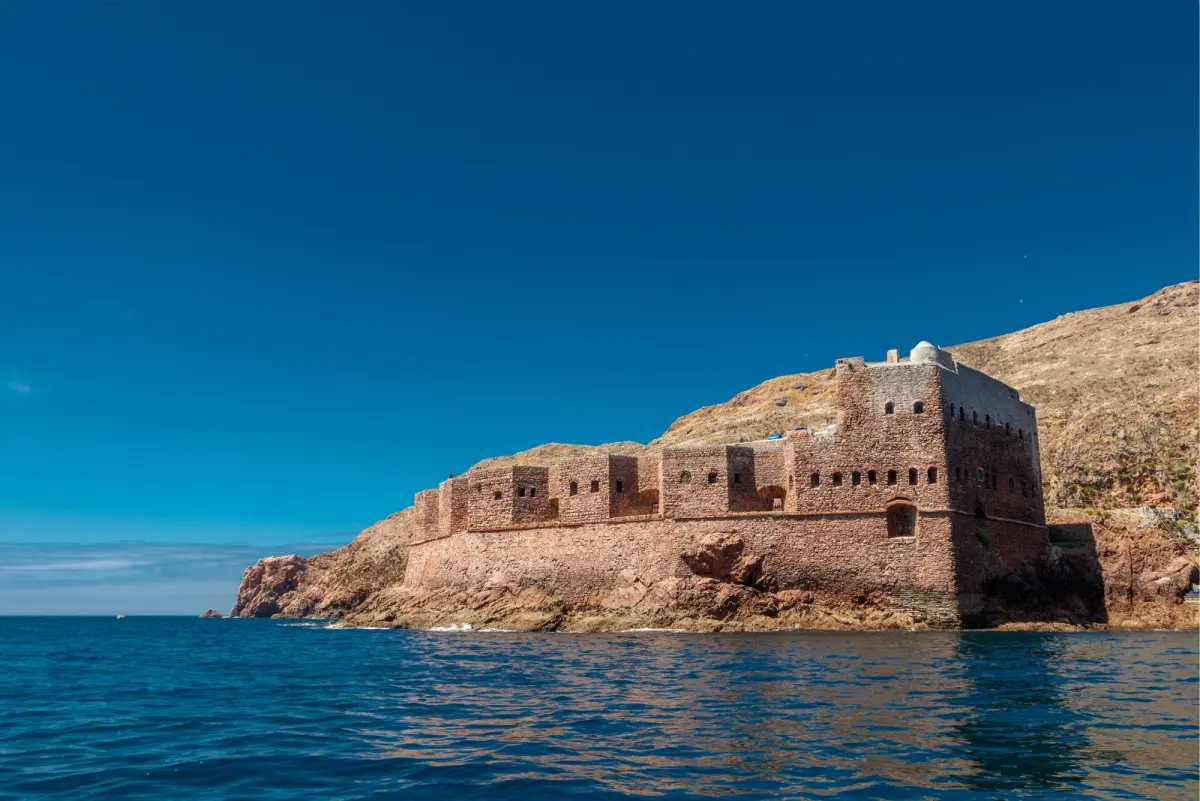
Work begins on the Forte de São João Baptista, a heptagonal fortress on its own rock, reached by a stone causeway.
- 1666
Fourteen Spanish warships besiege the fort. Fewer than twenty defenders under Avelar Pessoa hold out until powder and food run dry, sinking a warship before they surrender.
- 1841
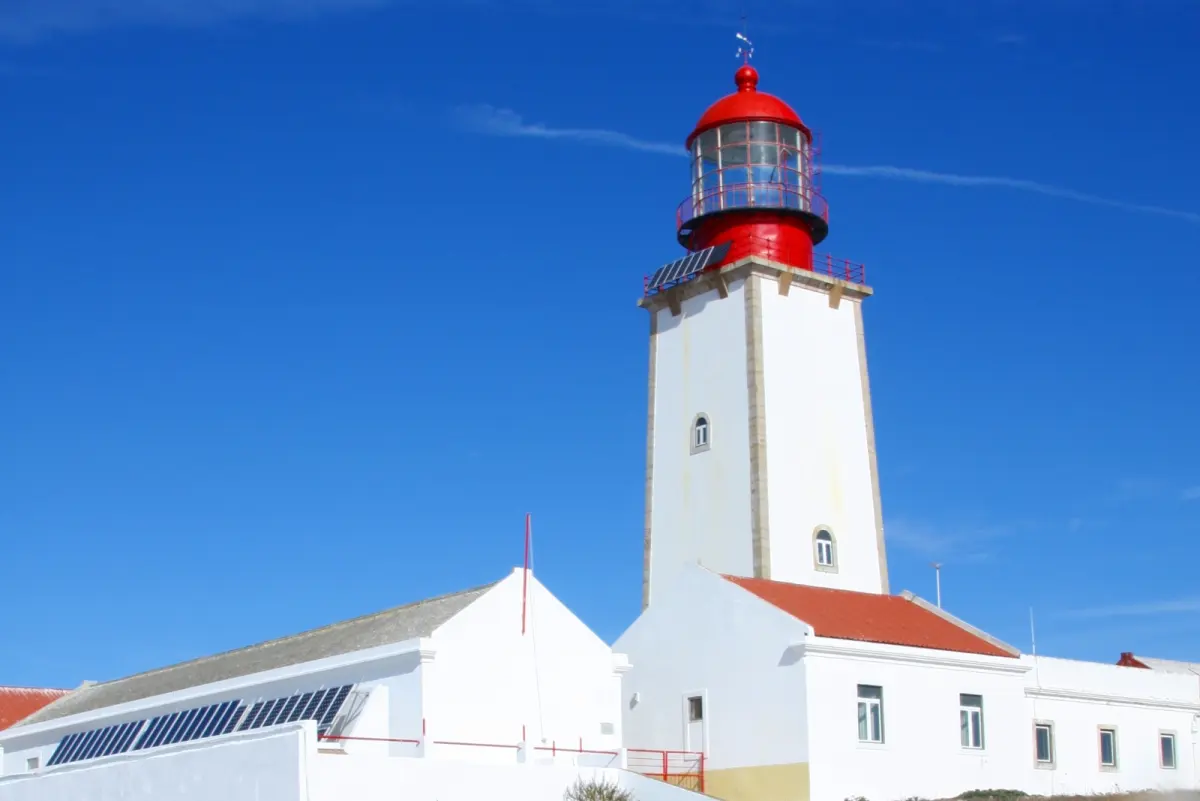
The Farol Duque de Bragança is lit at the summit. Its 29 m tower still guards one of Europe's busiest shipping lanes.
- 1940s
The Bairro dos Pescadores, twenty fishermen's houses, becomes the island's only settlement.
- 1981
The archipelago is declared a Nature Reserve, one of Portugal's first.
- 1998
The reserve grows to the whole archipelago and its waters: the Reserva Marinha das Berlengas.
- 2011
UNESCO classifies the Berlengas a World Biosphere Reserve.
- 2022
The Berlengas Pass: every visitor now registers before stepping ashore.